Building Feedstock Supply From the Ground Up
GPT Circular creates the structures required to move used plastic from fragmented local sources into reliable industrial supply chains.
Our model starts with confirmed demand and works backwards to build the collection, commercial, processing and logistics systems required to deliver it.
Step 01
Every Supply Program Starts With a Real Market

Collection without a reliable buyer rarely creates a durable system.
Before developing a feedstock network, GPT Circular works to establish:
- The required polymer
- The acceptable source categories
- Material form
- Contamination limits
- Moisture limits
- Particle size
- Bulk density
- Packaging requirements
- Testing requirements
- Required monthly or annual volume
- Delivery location
- Commercial terms
- Intended processing pathway
This demand-led approach allows local procurement and processing systems to be designed around a real commercial outcome.
Step 02
Understanding Where the Material Sits

In emerging markets, plastic may pass through several participants before reaching a processor.
GPT Circular maps the existing system, including:
- Households and businesses
- Villages and community organisations
- Informal collectors
- Waste banks
- Small aggregators
- Larger traders
- Municipal systems
- Landfills and stockpiles
- Sorting and recycling facilities
- Existing buyers and competitors
We assess volumes, seasonal changes, material value, current collection behaviour, transport distances, processing availability and the relationships that influence material access.
Step 03
Working With the System That Already Exists
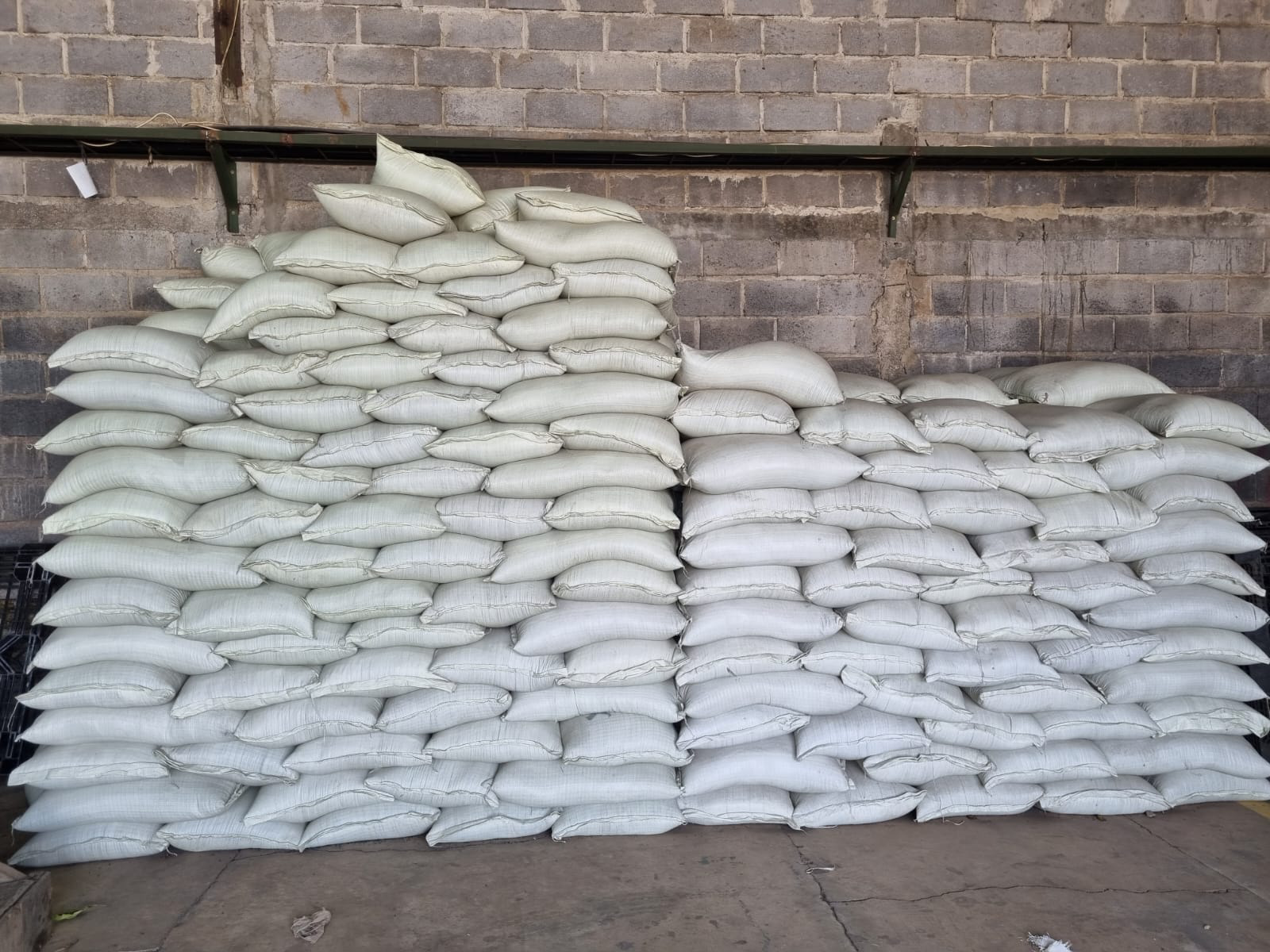
Collection systems cannot be built from outside the local environment.
GPT Circular engages the people and organisations that determine whether a program will operate successfully, including:
- National and local government
- Municipal waste departments
- Village governments
- Community leaders
- Women’s and family organisations
- Waste banks
- Informal collectors
- Existing aggregators
- Processors
- Transport operators
- Commercial buyers
The objective is not to displace functioning local participants unnecessarily. It is to connect them to larger, more consistent markets and improve the system’s ability to meet customer requirements.
Step 04
Collection Must Be Commercially Viable

Plastic leakage will not be stopped at scale through environmental aspiration alone.
Material must have:
- A recognised buyer
- A defined specification
- A collection value
- A payment mechanism
- An aggregation pathway
- A processing route
- A viable logistics model
GPT Circular develops pricing and payment structures designed to motivate collection while remaining commercially sustainable for the final market.
Where appropriate, collection incentives can support villages, community organisations, waste banks and collectors while creating a dependable feedstock stream.
Step 05
Converting Material Into Feedstock

Collected plastic is not automatically usable industrial feedstock.
Depending on the customer specification, material may require:
- Initial inspection
- Sorting by polymer or source
- Removal of prohibited materials
- Baling
- Size reduction
- Washing
- Drying
- Densification
- Agglomeration
- Granulation
- Pelletising
- Sampling
- Laboratory testing
- Packaging and labelling
GPT Circular works through its own operations and approved processing partners to prepare material against agreed requirements.
Step 06
Practical Integrity That Strengthens as Supply Scales

Emerging-market supply chains do not always begin with the documentation and systems expected in mature markets.
GPT Circular’s approach is to introduce practical controls from the beginning and progressively strengthen them as volume and operating capability grow.
Controls may include:
- Supplier registration
- Collection-point records
- Source-category records
- Weight documentation
- Transport records
- Incoming material inspections
- Batch identification
- Processing records
- Sampling and testing
- Stock reconciliation
- Shipment records
- Health and safety procedures
- Environmental controls
- Corrective-action processes
The applicable controls depend on the material, market, customer requirements and maturity of the supply network.
Step 07
From Local Collection to Global Delivery

Every Supply Program Starts With a Real Market
Collection without a reliable buyer rarely creates a durable system.
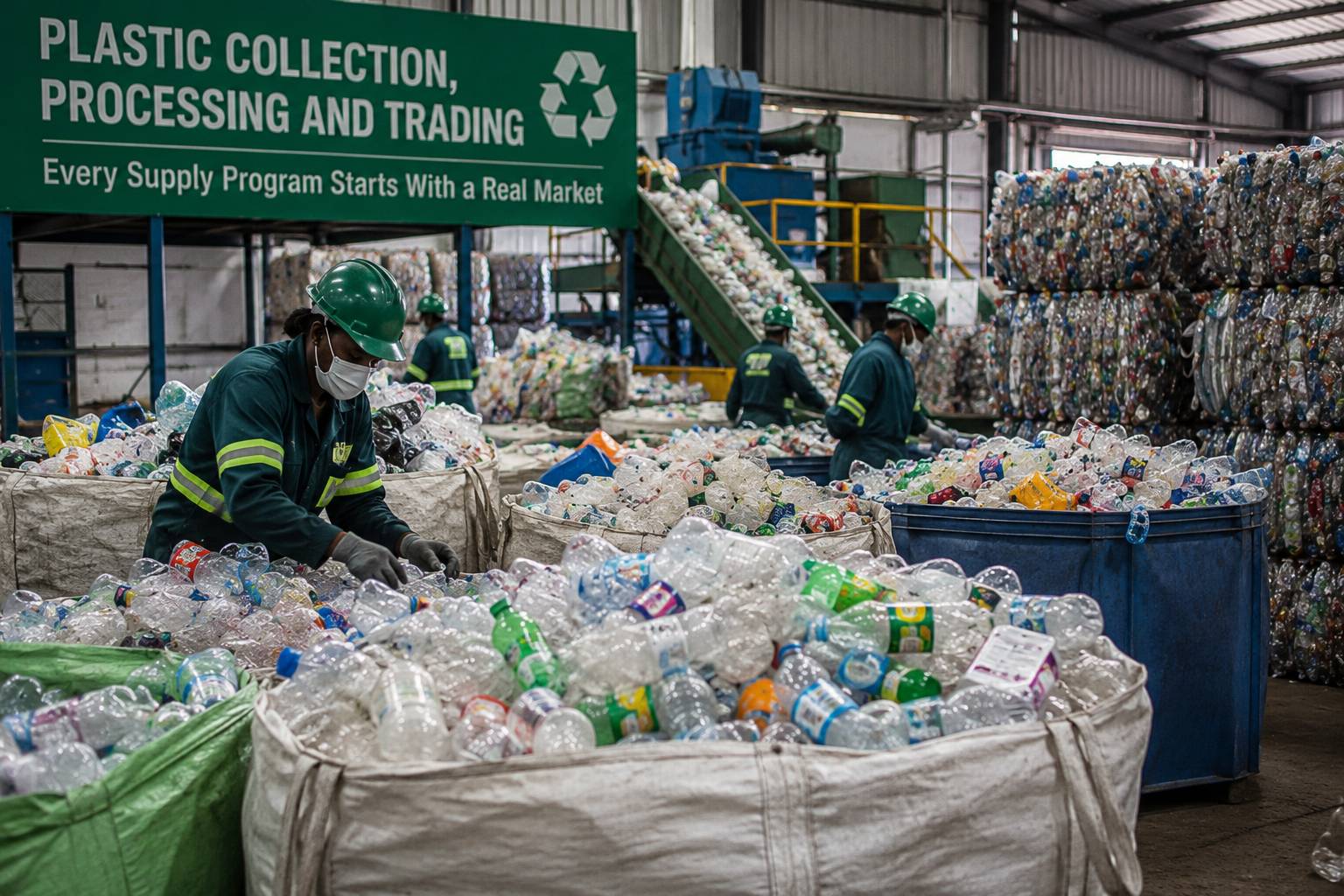
Before developing a feedstock network, GPT Circular works to establish:
- The required polymer
- The acceptable source categories
- Material form
- Contamination limits
- Moisture limits
- Particle size
- Bulk density
- Packaging requirements
- Testing requirements
- Required monthly or annual volume
- Delivery location
- Commercial terms
- Intended processing pathway
This demand-led approach allows local procurement and processing systems to be designed around a real commercial outcome.
Understanding Where the Material Sits
In emerging markets, plastic may pass through several participants before reaching a processor.
GPT Circular maps the existing system, including:
- Households and businesses
- Villages and community organisations
- Informal collectors
- Waste banks
- Small aggregators
- Larger traders
- Municipal systems
- Landfills and stockpiles
- Sorting and recycling facilities
- Existing buyers and competitors
We assess volumes, seasonal changes, material value, current collection behaviour, transport distances, processing availability and the relationships that influence material access.
.jpg)
Working With the System That Already Exists
Collection systems cannot be built from outside the local environment.

GPT Circular engages the people and organisations that determine whether a program will operate successfully, including:
- National and local government
- Municipal waste departments
- Village governments
- Community leaders
- Women’s and family organisations
- Waste banks
- Informal collectors
- Existing aggregators
- Processors
- Transport operators
- Commercial buyers
The objective is not to displace functioning local participants unnecessarily. It is to connect them to larger, more consistent markets and improve the system’s ability to meet customer requirements.
Collection Must Be Commercially Viable
Plastic leakage will not be stopped at scale through environmental aspiration alone.
Material must have:
- A recognised buyer
- A defined specification
- A collection value
- A payment mechanism
- An aggregation pathway
- A processing route
- A viable logistics model
GPT Circular works through its own operations and approved processing partners to prepare material against agreed requirements.
Where appropriate, collection incentives can support villages, community organisations, waste banks and collectors while creating a dependable feedstock stream.
.jpeg)
Converting Material Into Feedstock
Collected plastic is not automatically usable industrial feedstock.
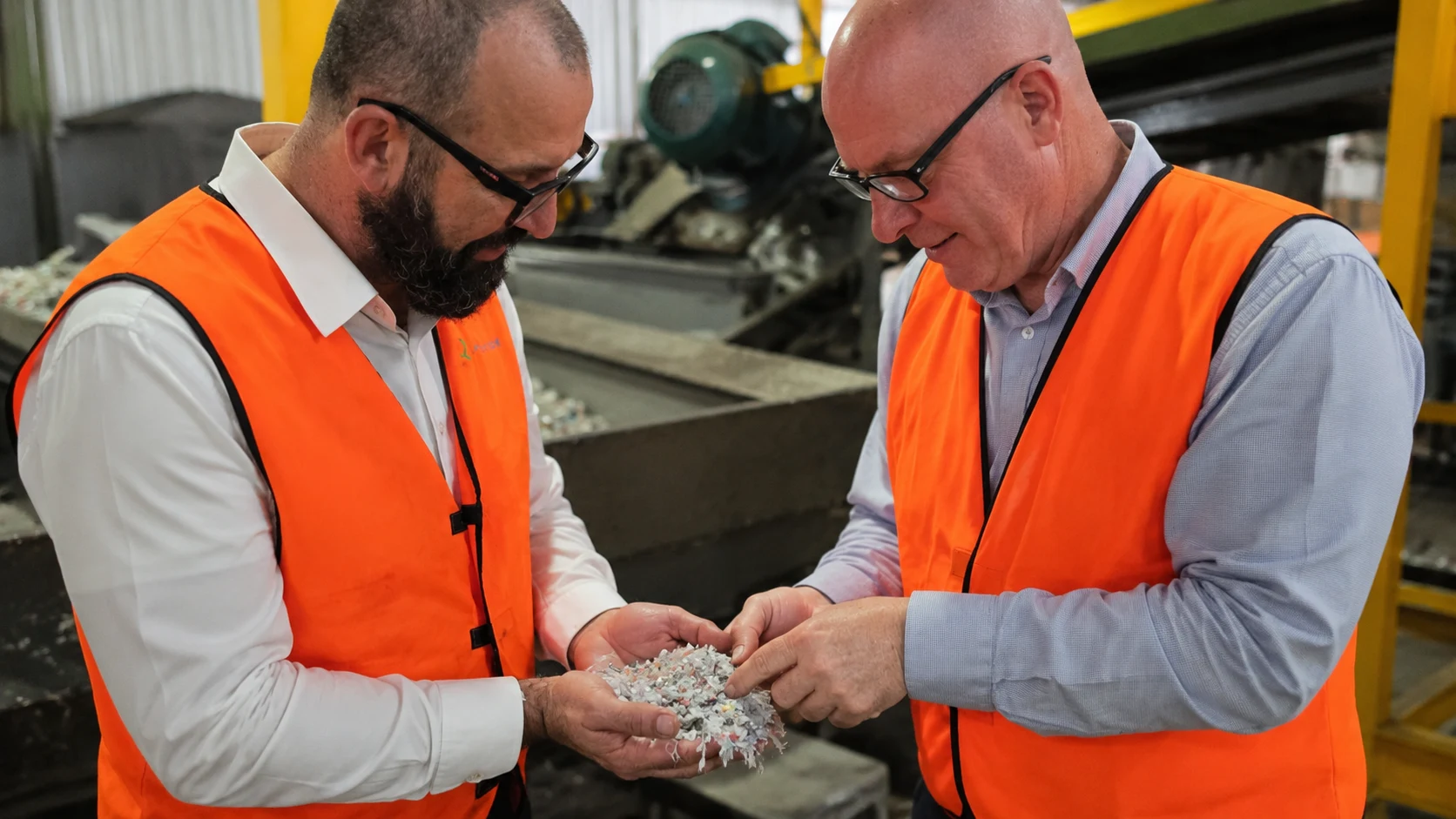
Depending on the customer specification, material may require:
- Initial inspection
- Sorting by polymer or source
- Removal of prohibited materials
- Baling
- Size reduction
- Washing
- Drying
- Densification
- Agglomeration
- Granulation
- Pelletising
- Sampling
- Laboratory testing
- Packaging and labelling
GPT Circular works through its own operations and approved processing partners to prepare material against agreed requirements.
Practical Integrity That Strengthens as Supply Scales
Emerging-market supply chains do not always begin with the documentation and systems expected in mature markets.
GPT Circular’s approach is to introduce practical controls from the beginning and progressively strengthen them as volume and operating capability grow.
Controls may include:
- Supplier registration
- Collection-point records
- Source-category records
- Weight documentation
- Transport records
- Incoming material inspections
- Batch identification
- Processing records
- Sampling and testing
- Stock reconciliation
- Shipment records
- Health and safety procedures
- Environmental controls
- Corrective-action processes
The applicable controls depend on the material, market, customer requirements and maturity of the supply network.

From Local Collection to Global Delivery
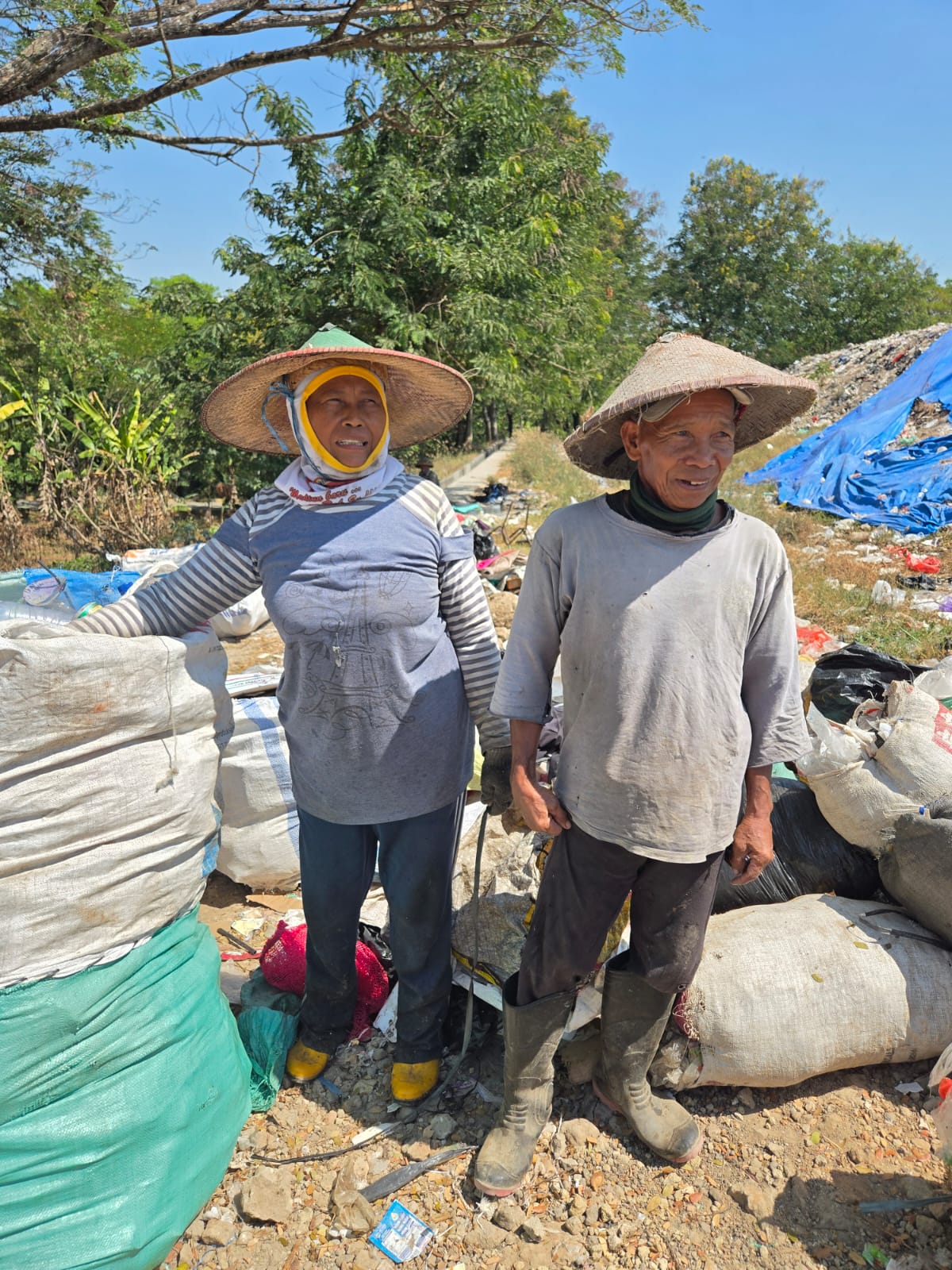
GPT Circular manages the commercial and operational steps required to deliver feedstock to market.

© 2026 PT GPT Circular Solutions & Global Plastic Trading Pty Ltd. All rights reserved.